College festivals across India are increasingly emerging as key discovery platforms for independent artists, shaping what many in the industry now see as an early-stage pipeline for talent. Recent on-ground events reinforce this shift.
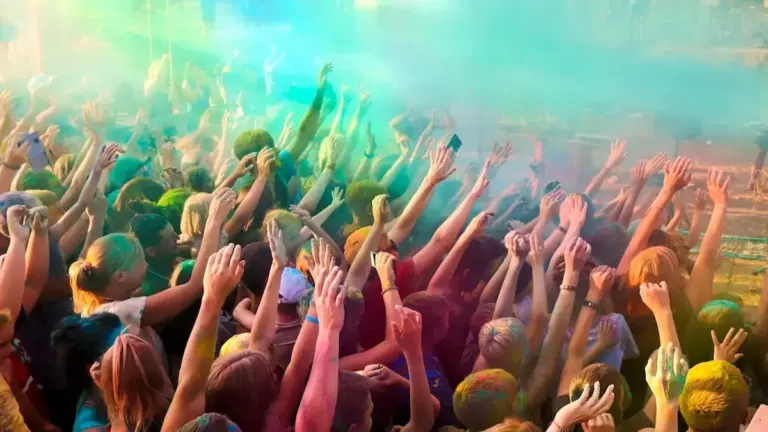
At Jadavpur University’s 2026 fest, indie acts like Euphoria, Naalayak, and Parikrama drew massive student crowds, with frontman Palash Sen noting that college festivals have historically been “birthplaces” for indie artists.
This is not an isolated case. Across campuses in Delhi, Haryana, and beyond, festivals are consistently featuring independent performers and drawing large, engaged audiences.
A Built-In Audience for Discovery
What makes college festivals unique is their audience structure.
Unlike ticketed concerts or curated festivals, campus events bring together thousands of students who are open to discovering new music. This creates an environment where indie artists can perform in front of large, attentive crowds without needing prior mainstream visibility.
Events like Tarang at Lady Shri Ram College and Sanskriti at Jadavpur University show how diverse programming, including indie music, is now central to campus culture.
For many artists, these performances act as their first exposure to a mass audience.
A Proven Pathway for Emerging Talent
The role of college festivals in artist development is not new, but it is becoming more visible.
Student-run music festivals like Strawberry Fields in Bengaluru have long provided platforms for semi-professional and college bands to perform in front of thousands, helping build early momentum in the indie scene.
Similarly, large-scale cultural fests such as Mood Indigo (IIT Bombay) and Saarang (IIT Madras) regularly host professional artists alongside student performers, creating a bridge between emerging and established talent.
These festivals function as a first stage in the live music ladder, before artists move on to clubs, ticketed gigs, and major festivals.
A DIY Ecosystem That Mirrors the Industry
Beyond performances, college festivals are also important because of how they are built.
They operate as DIY creative ecosystems, where students handle everything from artist bookings to production, marketing, and sponsorships.
This environment mirrors the real music industry in a compressed form. Artists not only perform but also interact with early fans, experiment with live sets, and understand audience reactions in real time.
For many, this becomes a training ground for navigating larger stages later.
Feeding Into the Larger Indie and Festival Circuit
The connection between college festivals and the broader indie ecosystem is becoming clearer.
Artists who gain traction on campus circuits often move on to indie festivals like NH7 Weekender, which itself was originally designed as a discovery platform for emerging acts.
This creates a pipeline that looks something like this: campus gigs lead to indie festival slots, which then translate into streaming growth and touring opportunities.
In this sense, college festivals are not separate from the industry. They are one of its earliest layers.
What This Means for Independent Artists
For independent musicians, the rise of college festivals as a pipeline is a significant opportunity.
Unlike traditional industry routes, campus gigs are more accessible and often less dependent on label backing. Artists can build grassroots audiences city by city, particularly in regions that may not have strong venue infrastructure.
A Grassroots Engine Driving the Indie Scene
India’s indie music boom is often discussed in terms of streaming platforms and global reach. But the foundation of that growth is still being built offline.
College festivals, with their scale, energy, and openness to new music, are becoming one of the most important grassroots engines of artist discovery in the country.
They may not always make headlines, but for many artists, this is where the journey actually begins.