
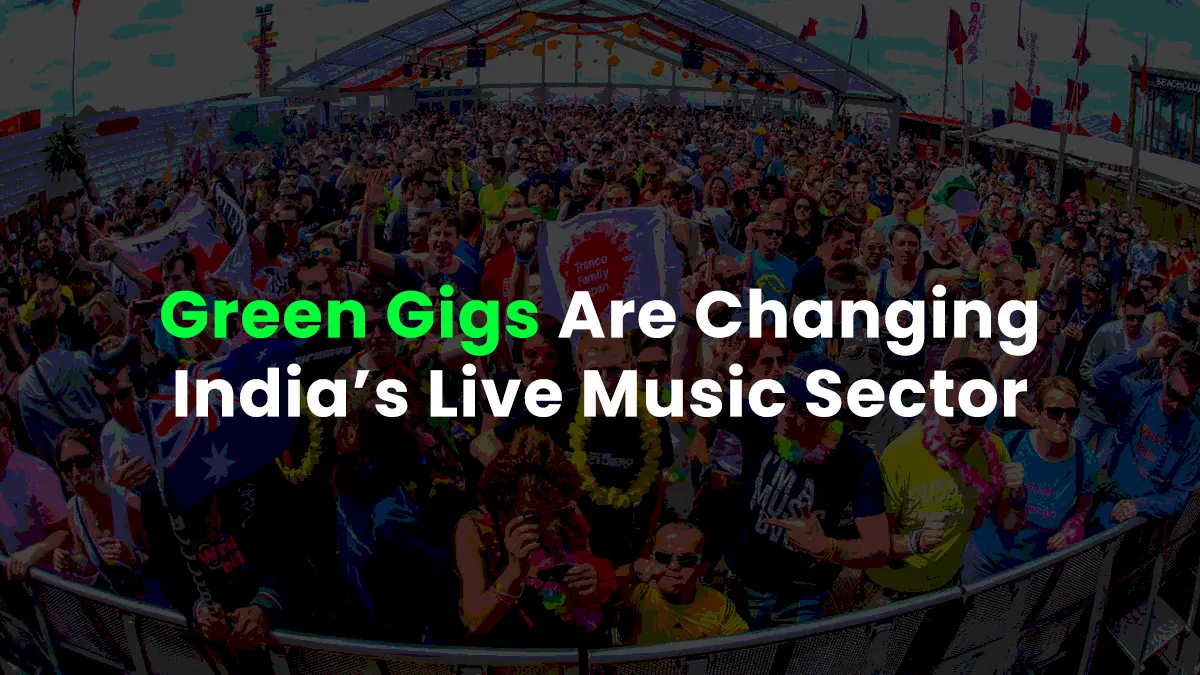
Environmental sustainability is altering how promoters and musicians plan live shows in India. The industry now refers to these ecologically conscious events as “green gigs.” These concerts operate on clean energy, eliminate single-use plastics, and use upcycled materials for stage construction. Transitioning to green gigs reduces the massive carbon footprint typically associated with live entertainment. This shift requires promoters and crews to update their daily operations, from ticketing down to venue waste management.
Solar Stages and Zero-Waste Festivals
Large-scale events generate extreme amounts of physical waste and rely heavily on diesel generators. Recent initiatives prove that alternative power methods work at a commercial scale. The Echoes of Earth festival in Bengaluru operates as a circular music festival and holds a Commended Greener Festival certification from A Greener Future. Organizers power their main stages entirely with solar energy and construct 80 percent of their festival infrastructure using repurposed scrap metal and wood. Their recent environmental impact reports document zero waste sent to landfills. They achieve this metric through strict waste segregation, extensive composting protocols, and the complete elimination of disposable plastic bottles across the venue.
Individual bands are also adapting their touring logistics. The Bengaluru folk-rock group Swarathma recently completed a multi-city tour powered by a portable clean energy system. They partnered with the Sustain Plus Energy Foundation and the SELCO Foundation to replace standard diesel generators. The crew used a 100KVA battery bank charged by renewable sources to run the entire sound system. Moving a heavy battery bank across cities requires strict logistical planning, but it establishes a functional template for touring bands.
The Economics of Eco-Friendly Touring
Adopting eco-friendly practices impacts event budgets directly. Initially, renting specialized solar equipment or hiring specialized waste management crews increases your upfront costs. Sustainable choices reduce overhead in the long term. Upcycling local materials for stage design often costs less than building custom sets that you discard after one show. Corporate sponsors actively look for environmentally conscious events to meet their own corporate social responsibility quotas. Aligning your shows with green practices opens new avenues for funding and brand partnerships.
Smaller or independent artists who organize their own local shows can integrate these practices early and build a distinct operational model. You do not need a massive budget to start. Enforcing a strict no-plastic policy at your merchandise table or encouraging fans to use public transport requires zero financial investment. You train your audience to expect a specific standard of environmental care when they attend your events.
Integrating Sustainability as an Independent Artist
For musical artists, adopting a green gig model requires you to scrutinize your technical riders and venue contracts. You hold the leverage to request specific environmental standards from the venues you book. Ask promoters to provide water dispensers instead of plastic bottles in the green room. Request clear documentation on how the venue handles waste post-concert. Specify that hospitality teams use reusable or biodegradable cutlery for catering.
Building a sustainable live sector relies on clear, practical adjustments to standard touring habits. When you normalize clean energy and strict waste management in your technical requirements, venues adapt to meet the demand. You make environmental accountability a standard operational requirement for every show you play.