
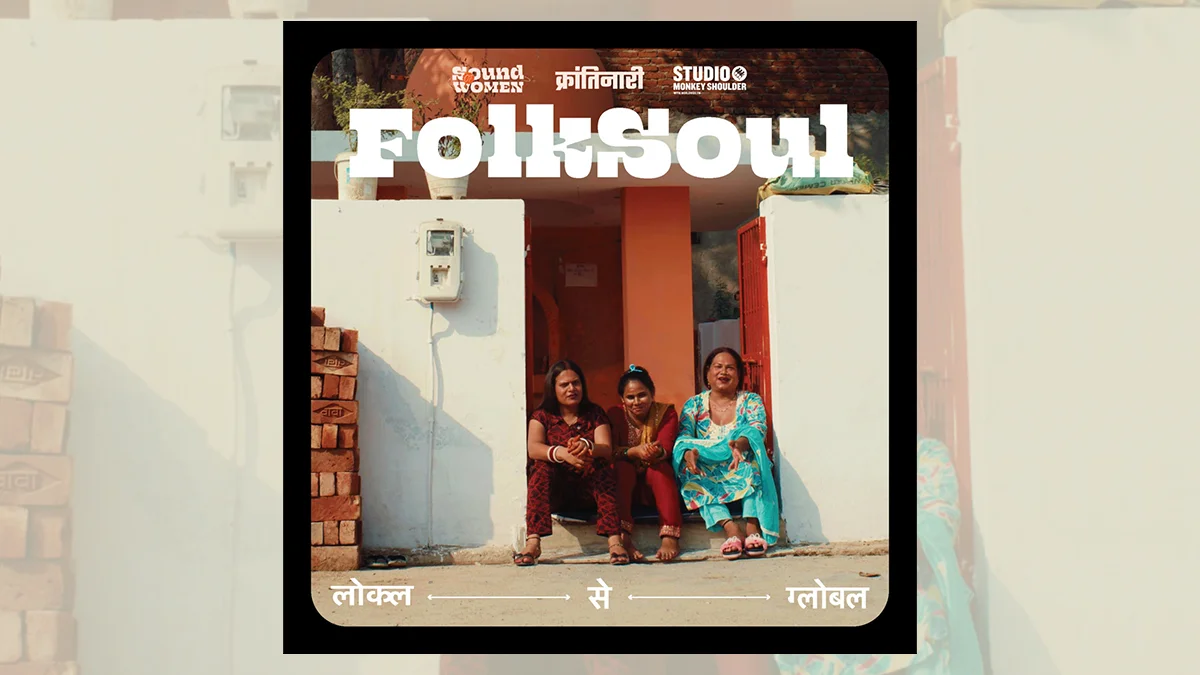
A new cultural initiative is placing a fully equipped recording studio inside a custom-designed bus and driving it directly into remote Indian villages. The project, named “Sound of Women,” operates under the Folksoul platform. It aims to document, produce, and archive the oral traditions of women living in regions where female participation in commercial music is either restricted or entirely absent.
Curated by rapper Krantinaari (Ashwini Hiremath) and percussionist-producer Charu Hariharan, the project treats regional folk music as a primary form of historical documentation. The initiative records the direct experiences of women dealing with migration, climate change, and informal labor, capturing these stories through songs passed down across generations.
Taking the Studio to the Source
The concept of a mobile studio emerged from a practical necessity. Krantinaari publicly noted the harassment and discrimination women frequently encounter in traditional, urban studio environments. The Folksoul bus functions as a direct response to those barriers. It provides a secure, accessible creative space where women can record their music without intimidation.
The logistical approach breaks from standard industry practices. Rather than asking rural performers to travel to metro cities, the production team brings the technical infrastructure to them. The first edition of the project focuses on the Kumaoni region of Uttarakhand, where the team collaborated with the Manzil Mystics Foundation to record artists like Hemanti Devi, Khasti Devi, and Pushpa Devi-Taiji directly within their own communities.
Recording inside a bus presents specific technical challenges. The acoustic paneling required to isolate the vocals often absorbs high frequencies, forcing the producers to adapt their mixing techniques on site. They avoid overwhelming the singers with complex technical directions, often pressing record and allowing the women to sing naturally without the pressure of a standard studio countdown.
Archiving Cultural Memory
Folk songs function as living archives. Women in these communities sing through every phase of life, using music to process grief, celebrate rituals, and document social changes. As younger generations move toward urban centers, these oral traditions face rapid erasure. By recording these specific dialects and rhythmic patterns, the Sound of Women project preserves endangered cultural memory before it disappears entirely.
The producers prioritize long-term collaboration over simple audio extraction. The team spends time building trust with the communities, eventually creating performance opportunities that bring these rural voices to urban stages. Recently, the Nyoli Ensemble, formed through this project, performed at the Bangalore International Centre, placing these traditional artists directly in front of independent music consumers.
Rethinking Production Models
For musical artists, this project provides a concrete example of alternative production models. You do not need to rely strictly on established commercial studios to create high-quality audio. When you encounter structural barriers in the traditional music sector, building your own recording infrastructure gives you total control over your creative environment. Projects like Sound of Women prove that authentic audio connects with audiences regardless of where it was recorded. Documenting the specific musical history of your region offers a clear path to building a unique and culturally significant body of work.