
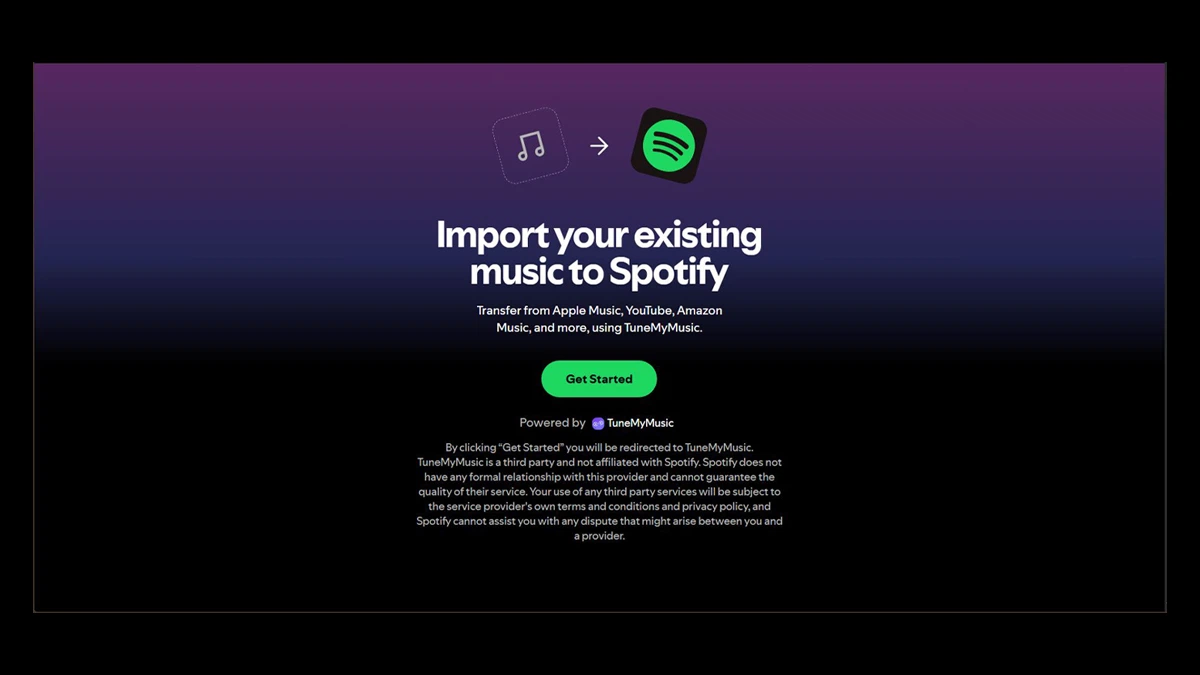
Spotify has introduced a new feature designed to make switching to its platform easier. The company recently rolled out a playlist transfer tool that allows users to import playlists from rival music streaming services directly into Spotify, removing one of the biggest barriers for listeners considering a move between platforms.
The feature is part of Spotify’s broader effort to compete more aggressively in the global streaming market, where services like Apple Music, YouTube Music, and Amazon Music are all competing for subscribers.
How the Playlist Transfer Tool Works
The new feature appears in the “Your Library” section of Spotify’s mobile app, where users can select an option called “Import your music.” From there, they can connect their accounts from other streaming platforms and transfer existing playlists directly into their Spotify library.
Spotify built the feature in partnership with TuneMyMusic, a third-party service that specializes in transferring playlists and music libraries between streaming platforms.
Through the integration, listeners can move playlists from a range of competing services including Apple Music, Amazon Music, YouTube Music, Deezer, Tidal, and SoundCloud.
The platform automatically matches songs from the source playlist with the same tracks in Spotify’s catalog. When an exact match is not available, the system attempts to find the closest alternative.
Lowering the Switching Barrier
For years, playlist lock-in has been one of the biggest reasons users hesitate to switch music platforms. Many listeners spend years building curated playlists that reflect their personal music tastes.
Traditionally, moving those playlists required using third-party apps, many of which limit the number of tracks users can transfer for free. By integrating the feature directly into the app, Spotify removes that friction and allows users to migrate their music libraries more easily.
Industry observers say the move is a direct response to similar tools introduced by competing streaming platforms.
Apple Music, for example, launched its own playlist import tool earlier, allowing users to transfer music libraries from services such as Spotify.
Spotify’s version now mirrors those capabilities while aiming to bring new listeners into its ecosystem.
Part of the Streaming Platform Competition
The launch highlights the intensifying competition between music streaming services. Platforms are increasingly adding features that make it easier for users to migrate their music collections rather than staying locked into a single service.
This trend reflects the reality that music catalogs across major streaming platforms are now largely similar. As a result, companies are competing through user experience features, recommendation systems, and creator ecosystems.
Playlist portability has become an important part of that strategy.
What It Means for Artists
For artists and the broader music industry, tools that make switching between streaming services easier could influence where listeners ultimately consume music.
If listeners can move their libraries freely between platforms, discovery and audience engagement may become less dependent on a single service. At the same time, platforms will continue competing to offer better recommendation algorithms, editorial playlists, and creator tools.
For independent musicians releasing music across multiple platforms through distributors such as Ziddi and other digital distribution services, wider platform competition can ultimately expand the potential reach of their music.
As streaming platforms continue refining their ecosystems, features like playlist transfer tools show how the battle for listeners is increasingly being fought through convenience and user control.