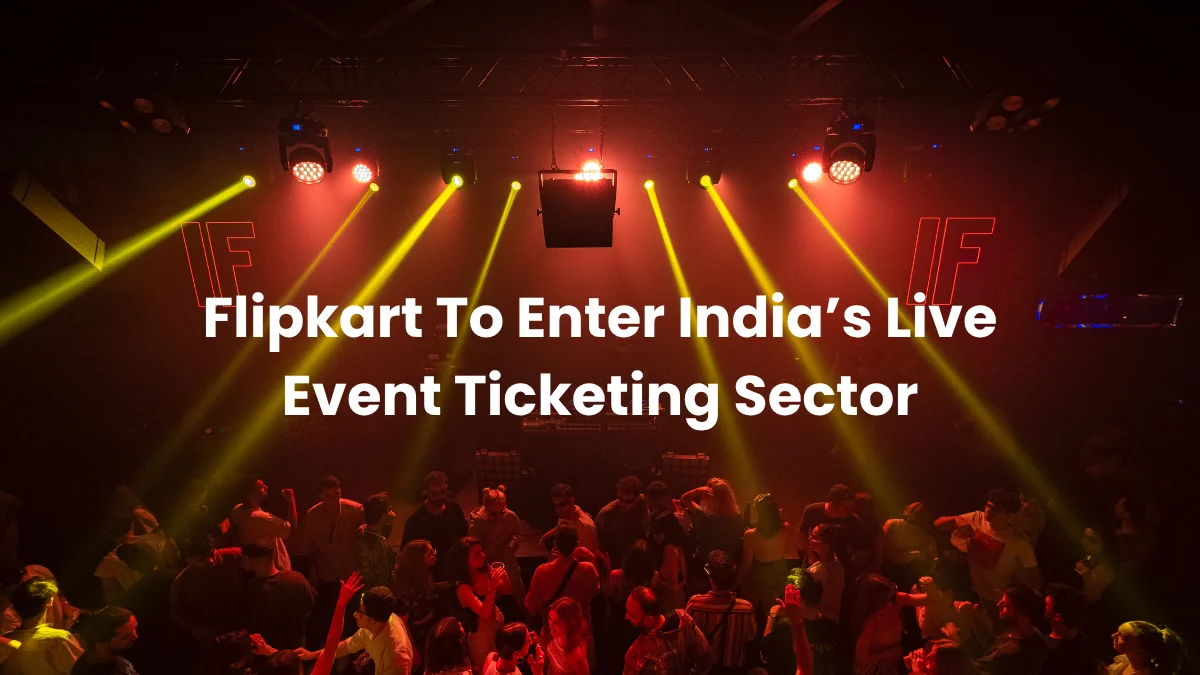
Flipkart is preparing to launch its own live event and entertainment ticketing platform in May 2026. The Walmart-backed e-commerce company enters a sector currently controlled by BookMyShow and Zomato’s recently launched District app. Flipkart plans to sell tickets for concerts, movies, and theatre shows. This expansion occurs as the company prepares for an expected initial public offering later this year.
The demand for live entertainment in India grew significantly last year. BookMyShow reported over 34,000 live events in 2025. Consulting firm EY projects the live events market will reach ₹143 billion by the end of 2026. Recent stadium tours by international pop and hip-hop acts pushed ticket sales to high numbers. Flipkart recognized this consumer spending and is positioning itself to capture the transaction fees and user data associated with live music attendance.
New Infrastructure for Live Acts
For independent musicians and event promoters, a new corporate player alters the ticketing infrastructure. BookMyShow and Zomato rely on their massive user bases to sell tickets. Flipkart brings its own audience from its retail operations. When a platform with millions of daily active shoppers integrates concert listings, your local tour dates gain exposure to a broader demographic. You have another avenue to list your gigs, adding friction to the monopoly held by legacy platforms.
Competition among ticket vendors often forces them to offer better terms to event organizers to secure exclusive rights. If you organize your own club shows or small festival stages, you can use this rivalry to negotiate lower platform fees or better promotional placement.
As you release more music and build a regional fanbase, managing your live event margins becomes an immediate priority. A competitive ticketing sector reduces your overhead costs and keeps more revenue in your hands.
Major tech companies view live music as a financial asset to increase their portfolios before a public listing. They rely on the cultural weight of live performances to drive their corporate valuations. You generate the actual value they attempt to monetize. Understanding this dynamic allows you to treat these platforms as strict utilities for your own business, rather than gatekeepers dictating your career trajectory.