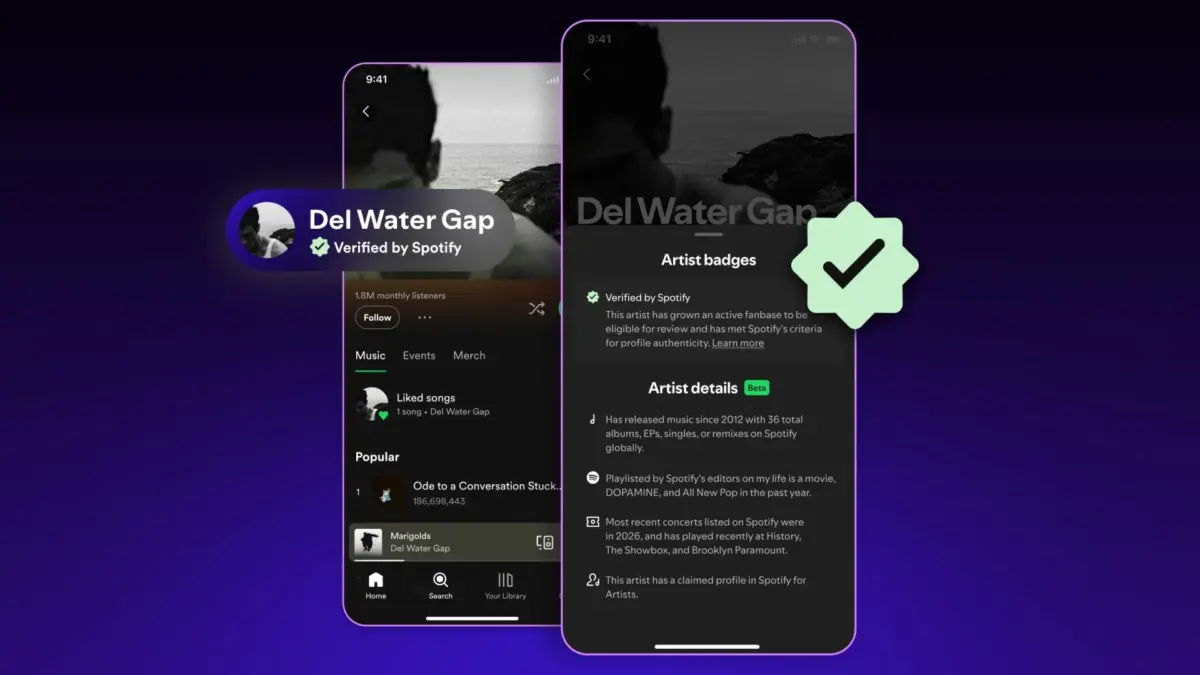
Spotify recently launched a new verification system to distinguish human musicians from artificial intelligence accounts. The audio streaming platform rolled out the “Verified by Spotify” badge on April 30, 2026. This update places a light green checkmark next to an artist’s name to confirm their authenticity. The company introduced this feature in response to the growing volume of synthetic tracks and AI-generated personas flooding the service.
The platform explicitly stated that accounts primarily representing AI-generated music are not eligible for this verification. This policy separates human-made catalogs from content farms that mass-produce tracks for background listening playlists.
The Verification Criteria and Profile Data
Earning this badge requires meeting specific metrics monitored by automated systems and human reviewers. Spotify looks for sustained listener interest rather than sudden, one-time spikes in engagement. Reports indicate the platform requires at least 10,000 active listeners over three consecutive months to meet the initial threshold.
The system also demands proof of a real-world footprint. Reviewers check for an identifiable presence outside the app, including linked social media accounts, official merchandise listings, and upcoming concert dates.
Alongside the checkmark, Spotify added a new section to all artist profiles that functions similarly to a nutrition label. This area displays data-driven metrics, such as your release history and live performance tracking. This data appears even if an account has not yet received the official verification badge.
Maintaining Your Human Footprint
For musical artists, this update changes how you manage your digital presence. Distributing your tracks through platforms like Ziddi is only the first step; you must actively prove your existence outside the streaming interface. Because the verification process relies on off-platform data, your live shows and social media activity directly impact your standing on the app.
If you rarely perform live or neglect your social channels, you risk falling into the same algorithmic category as automated accounts. Securing your verification means maintaining a consistent public profile. When a platform uses concert dates and physical merchandise to confirm your identity, your offline work becomes a mandatory part of your digital infrastructure.