
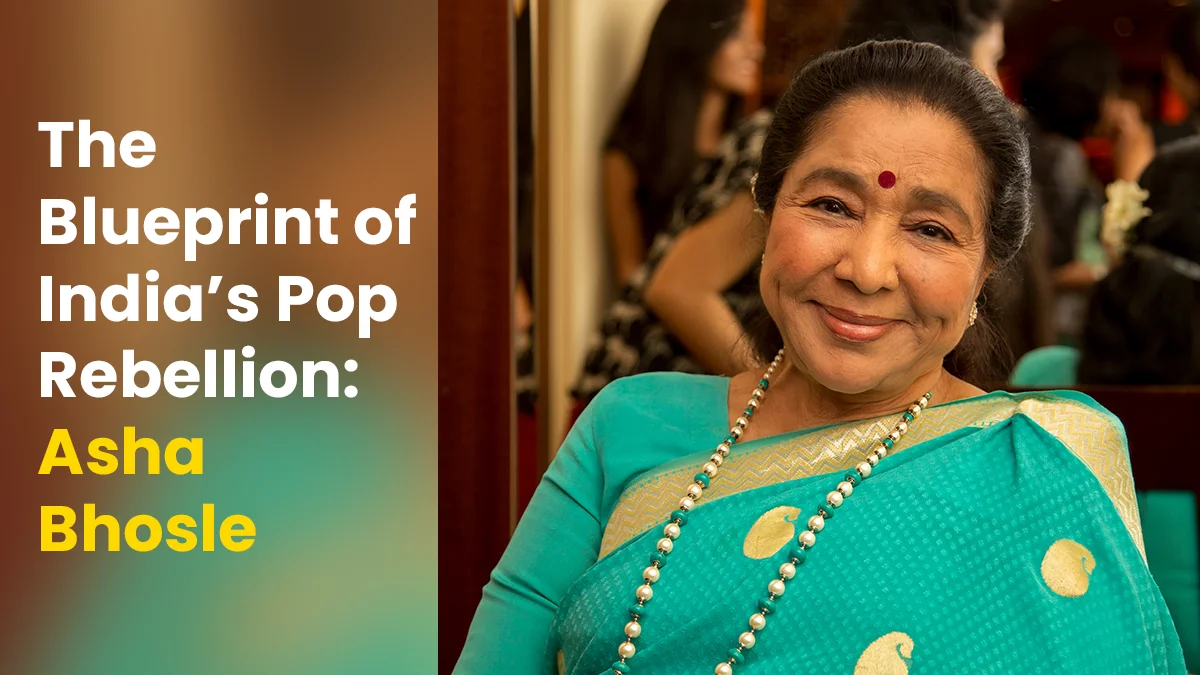
The passing of Asha Bhosle on April 12 marks the conclusion of a profoundly radical musical era. While the tributes pouring in rightly focus on her staggering volume of work spanning over eight decades and 12,000 recordings, her true impact on the contemporary Indian music landscape runs deeper than historical metrics. For the modern independent artist navigating genre fluidity and vocal experimentation, her catalog remains the original masterclass in breaking the rules.
Forging an Unorthodox Path
In an industry that historically categorized female voices into strict archetypes, Bhosle refused to be musically typecast. During the foundational years of Hindi cinema, the playback system heavily favored a specific, pristine tone for the virtuous female lead. The complex, rhythm-heavy compositions were often pushed to the periphery. Bhosle leaned into that exact space and turned it into the mainstream.
She embraced the material others hesitated to touch. From the brass-heavy cabaret compositions of R.D. Burman and O.P. Nayyar to deeply classical ghazals and traditional folk, her voice adapted without losing its intrinsic character. She brought an unprecedented level of vocal agility and Western sensibility to the recording studio. She proved that a singer could execute a breathy pop hook in one session and a rigorous classical modulation in the next, doing so long before the industry had a vocabulary for crossover artistry.
The Global Vanguard
For today’s independent creators who build their careers on cross-cultural projects, it is essential to recognize her pioneering role in placing Indian pop on the global map. Her willingness to experiment extended far beyond the confines of Mumbai film studios.
Whether collaborating with Boy George in the early nineties, inspiring Cornershop’s iconic tribute “Brimful of Asha,” or recording with international acts like Gorillaz, she possessed an inherent understanding of how to translate her vocal identity across stylistic borders. She approached music with a boundless curiosity that continually challenged traditional frameworks. She anchored these international projects entirely, showing generations of musicians that Indian artistry could seamlessly integrate into global pop culture without diluting its essence.
A Legacy of Relentless Reinvention
What remains most instructive for the current ecosystem is her approach to longevity. Her discipline was absolute, cultivated out of necessity during her early years of grueling travel and rigorous daily practice. Her adaptability ultimately defined her career. As recording technologies evolved and musical tastes shifted from the acoustic arrangements of the sixties to the synthesized beats of the nineties and beyond, her vocal delivery evolved alongside them. She always sounded like the future.
Asha Bhosle leaves behind an enduring blueprint for artistic survival. She demonstrated that sustained relevance requires both an unshakeable command of craft and the audacity to continuously defy expectations. The Indian music industry has lost its most versatile voice, and the boundary-pushing spirit she instilled in the culture remains firmly embedded in every artist who dares to sing differently.